
PlumbingHamilton, Ontario
Triple MMM Plumbing: a 45-page plumbing site with 16 city pages
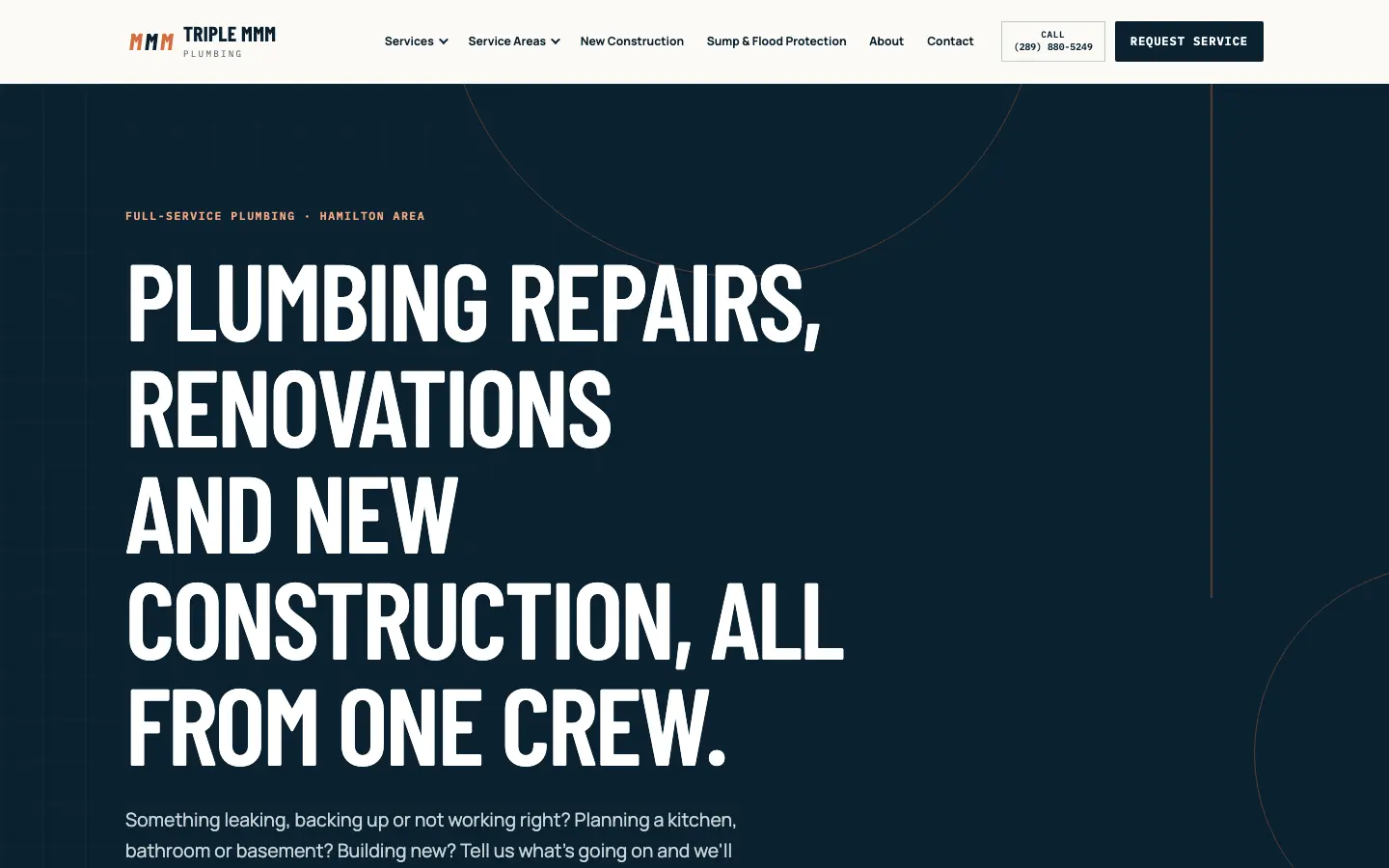
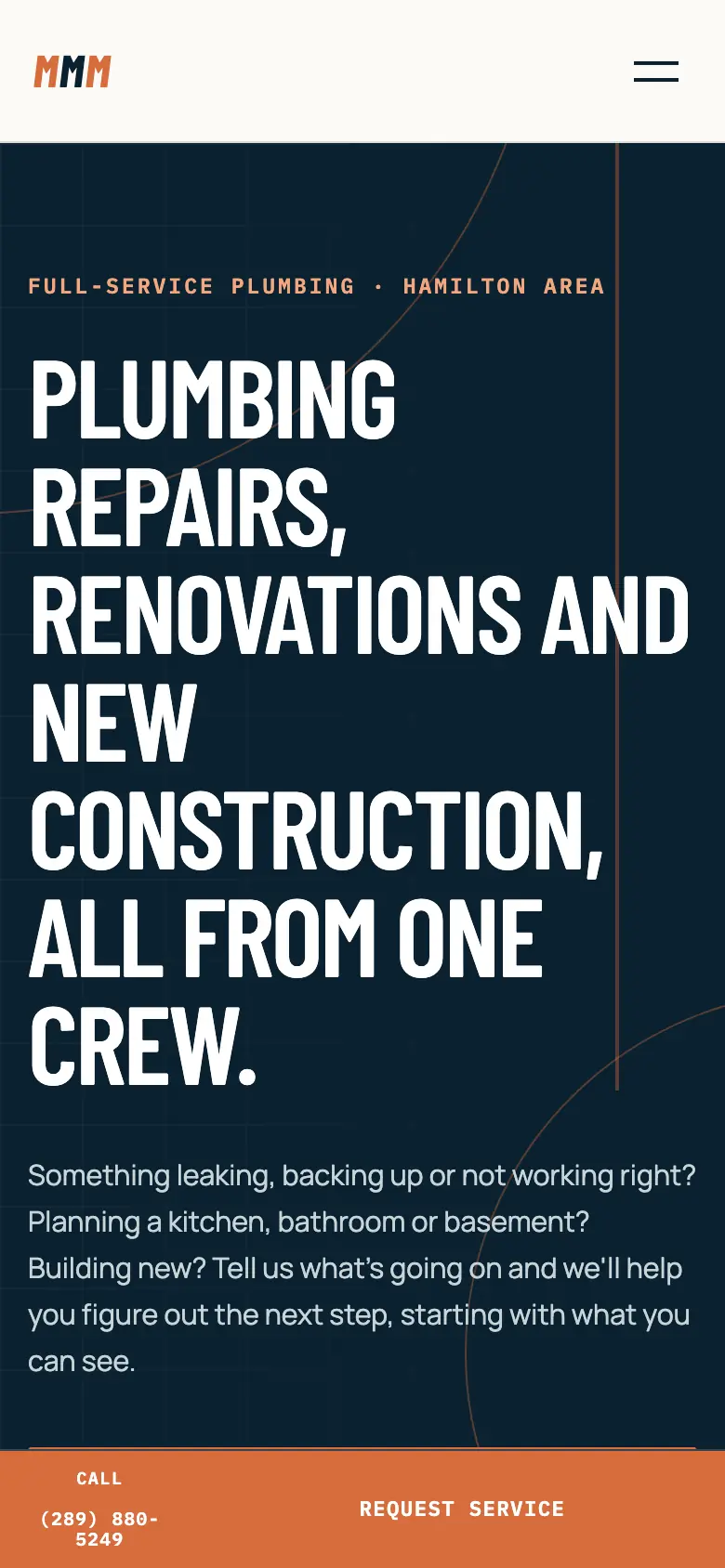
Schkovl built the website for Triple MMM Plumbing, a plumbing company based in Hamilton. It went live in September 2026 and has 45 pages in its sitemap, arranged so a homeowner can find the right service, their own town, or a straight answer to a common plumbing question.
- Pages in the sitemap
- 45
- Every one returned 200 and was open to search on October 28, 2026.
- City pages
- 16
- One page per town, under a service-area hub.
- Plumbing guides
- 13
- Plain-language resource pages.
What we did
- Built 45 pages: a services hub with 5 service pages, a sump and flood hub with 3 pages, and a new construction page.
- Added a service-area hub with 16 city pages and 13 guides that answer questions people ask before they call.
- Added Plumber structured data and a request form that refuses to send when its email settings are missing.
- Fixed every launch blocker from a pre-launch audit, then took internal jargon out of the visible copy.
How the site is organised
A homeowner with a wet basement and a builder planning rough-in work need different pages. The site separates repair and drain services, sump pump and flood protection, new construction and a guide library, so each visitor lands on the part that fits their job.
The 16 city pages cover Hamilton, Stoney Creek, Ancaster, Dundas, Waterdown, Burlington, Oakville, Milton, Grimsby, Brantford, Cambridge, Kitchener, Guelph, St. Catharines, Niagara Falls and Welland. The guides answer questions people ask before they call, such as how to shut off the water during a leak, how to tell a main sewer clog from a single blocked fixture, and what to do first after a sewer backup.
How we built it
Every page is prerendered as static HTML with Next.js and served from Vercel. The content lives in typed files inside the repository, so there is no database or CRM for the owner to maintain or pay for.
Before launch, an audit of the site listed launch blockers, and each one was fixed before go-live. A plain-language pass then took internal jargon out of the visible copy. The city pages and the first guides were added in the same week.
The request-service form fails closed: if the email delivery settings are missing, it refuses to send instead of quietly losing the request.
Check it yourself
Every fact below was checked on the live site on .
- Pages in the sitemap
- 45, all returning 200, none marked noindex
- How to check: open the sitemap.xml file on triplemmmplumbing.ca and request each URL.
- Service pages
- 5, under a services hub
- How to check: open the services page on triplemmmplumbing.ca.
- Sump pump and flood pages
- 3, under their own hub
- How to check: open the sump and flood page on triplemmmplumbing.ca.
- City pages
- 16, under a service-area hub
- How to check: open the service areas page on triplemmmplumbing.ca.
- Resource guides
- 13
- How to check: count the /resources/ URLs in the sitemap.
- Structured data
- One Plumber node on the home page
- How to check: view the home page source and read the JSON-LD block.
- Hosting and headers
- Prerendered pages served by Vercel, with a content security policy and HSTS
- How to check: read the response headers of any page.
What we did not claim
Related
- Website Design & DevelopmentNew sites, and new pages on the site you already have.
- SEO & Answer Engine OptimizationTitles, structured data, sitemaps and pages that answer real questions.
- The Gap Analysis methodHow we find what is broken before we build.
- All deploymentsEvery live client site we list, with dates.
More deployments
- Innovative Car ClinicUpgrades to an existing site: 60 new service, town and guide pages, menu and title fixes, a new contact-form path and Google Business Profile posting.
- RKL Demolition & ExcavationA new website with a staged launch: each page opens to search engines only after its facts are confirmed.
- Epoxy MindA new website for a metallic epoxy floor installer, live in a prelaunch stage while the owner confirms the job details shown on it.